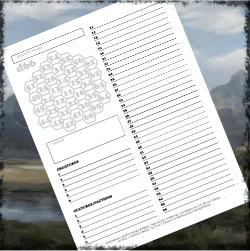
Allies are hard to come by in the harsh worlds represented by most tabletop-roleplaying games and systems don't always provide mechanisms for tracking the friends player-characters make during their adventures. Here's a relatively painless way to use a persistent reaction rating to monitor their relationships with notable non-player-characters.
Start with the standard reaction roll
Make a standard roll for demeanor (reaction) or choose a disposition that makes sense in the context of your campaign.

| Score (2d6) | Disposition/Relationship |
|---|---|
| 2 or less | Hostile |
| 3 to 5 | Unfriendly |
| 6 to 8 | Neutral |
| 9 to 11 | Friendly |
| 12 or more | Allied |
Write down that score next to wherever you keep your notes for that NPC.
How to read the dispositions
- Hostile: complete refusal to cooperate.
- Unfriendly: will only cooperate grudgingly and only then with extensive incentives.
- Neutral: will cooperate at a cost.
- Friendly: will generally cooperate without a cost if interests are aligned.
- Allied: will generally cooperate without question.
Improving relationships
To increase an NPC's demeanor when the party successfully completes tasks that benefit the NPC. It must be known by the NPC that the party is responsible for their improved fortunes. Each of these successes improves their score by one point. When that score crosses a disposition threshold, increase it accordingly.
Falling out of love
If the NPC learns that the party is responsible for working against it, decrease their score. At the referee's discretion, an NPC might make demands or requests of the party. If the party refuses or fails to deliver, that will impact the NPC's score. The NPC should expect the same sort of cooperation from the party that their disposition confers to the party.